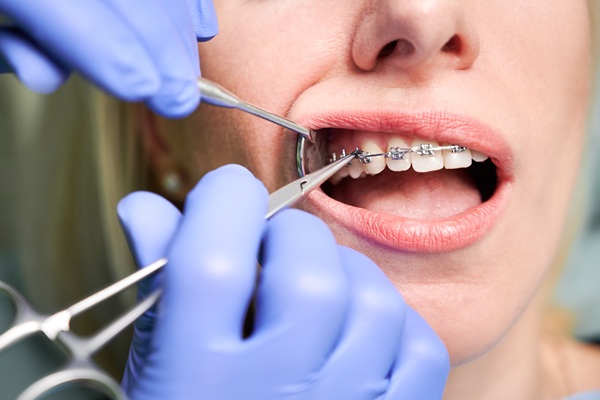
Braces are a great way to straighten teeth, close gaps and even correct uneven bites. However, some patients may require more than just braces. In these scenarios, a general dentist may recommend the use of additional bands, which can be extremely helpful for the entire treatment process.
Bands for braces
Keep reading to find out what bands are, how they are used and what the benefits are!
What are bands for braces?
There are two types of bands for braces. The first type are the bands that go around each metal bracket. These hold the wires in place so that the brackets can be connected. The second type are interarch rubber bands, which are used for enhancing the treatment process. Both are typically made of plastic materials, which are completely safe for the mouth. General dentists often allow children patients to choose the color of their bands to make the treatment process more enjoyable.
Typically, the patient is given a stockpile of interarch bands that can be used as needed. When the patient eats or brushes their teeth, the bands are to come out. The bands that go around the brackets do not come out, unless the dentist needs to replace or repair.
How bands are used for braces
The bands that go around each bracket are used to simply hold the wire in place. Wires feed through each bracket on every tooth, and with the help of the bands, the wires are able to stay in one place without moving around.
Interarch bands are used for braces to adjust the bite and position of the jaw. They help apply additional force on certain teeth so that there is more pressure exerted. This gives the teeth and jaw more of a push that may not have been achievable without them. Typically, the general dentist will apply bands a few months within the process. They want to allow the teeth to begin to shift before applying them.
When placement does take place, the general dentist will likely put the bands on two top brackets and then connect them to two lower brackets. Sometimes, bands will be placed on multiple teeth to ensure that the jaw moves appropriately. As the treatment progresses, the dentist may make additional adjustments based on how the teeth and jaw are reacting.
Benefits of bands
There are a lot of benefits to bands for braces. General dentists often recommend interach ones during the final step in the braces treatment process because they can be very beneficial towards the end. Some of the benefits include the following:
- Achieving a more even bite
- Ensuring that the jaw is properly aligned
- The jaw and bite are both able to be more refined
- Ensuring a proper hold
- Bands can speed up the end of braces treatment
Learn more today!
Want to know more about bands for braces? Our team can help! Questions and concerns regarding braces and the use of bands should be addressed by a general dentist. Reach out today to get started!
Request an appointment here: https://www.foothillfamilydentists.com or call Foothill Family Dentistry at (949) 506-2115 for an appointment in our Foothill Ranch office.
Check out what others are saying about our dental services on Yelp: Braces in Foothill Ranch, CA.
Recent Posts
A cosmetic dentist often hears concerns about whitening discomfort and can explain why sensitivity sometimes increases during treatment. Whitening products lift stains by allowing active ingredients to move through enamel, which can temporarily irritate the tooth's inner structures. Understanding what causes sensitivity and how to reduce it helps patients pursue a brighter smile more comfortably.Whitening…
If you are considering getting dentures, working with a prosthodontist offers advantages for your long-term oral health. This teeth replacement option requires precision, personalized planning, and a deep understanding of human facial structure. A prosthodontist has the specific training and experience to make all the difference in restoring your smile, comfort, and overall health.After completing…
General dentists recommend adding flossing to your oral hygiene routine once a day. This important practice removes plaque and food debris that brushing alone cannot reach. While string floss is an effective way to clean between your teeth, several alternative methods can make the cleaning process more comfortable and efficient.Flossing is an essential part of…
Giving a child early orthodontics can help to eliminate unnecessary work. It can also reduce the number of needed extractions or surgery. Sometimes, a child may need orthodontics as early as the age of seven. Because every child is different, some may need earlier treatment than others. Bringing your child to an orthodontic evaluation by…